
Cracked tile, a sticking front door, or a slope you can feel rolling a marble across the living room — these are the warning signs that push San Antonio homeowners into the pier and beam vs slab foundation debate, often after a quote arrives that makes the heart skip.
The choice shapes repair costs, resale value, and how the structure handles the region's notorious expansive clay soils. Slab foundations sit directly on grade and tend to crack when soils swell or shrink, while pier and beam systems suspend the structure on isolated supports with a crawlspace underneath.
Each approach carries different price tags, different inspection demands, and different long-term risks tied to drainage, plumbing leaks, and foundation movement. Homeowners weighing options should expect repair estimates ranging from $4,000 to $30,000+, depending on damage severity and the foundation type already in place.
Quick Takeaways: Pier and Beam vs Slab in San Antonio
- Pier and beam foundations sit on raised piers with a crawl space, while slab foundations rest directly on poured concrete over the soil.
- San Antonio's expansive clay soils shift dramatically with seasonal moisture, making foundation choice a critical decision for long-term stability.
- Repair costs vary widely by foundation type and damage severity, generally ranging from $4,000 for minor work to $30,000+ for full underpinning or releveling projects.
- Pier and beam systems offer easier access for plumbing repairs and targeted releveling, while slabs provide a lower upfront build cost and reduced pest entry points.
- Homeowners noticing warning signs like drywall cracks, uneven floors, or gaps around windows should consult licensed local foundation contractors before damage worsens.
How Pier and Beam and Slab Foundations Work in San Antonio Soil
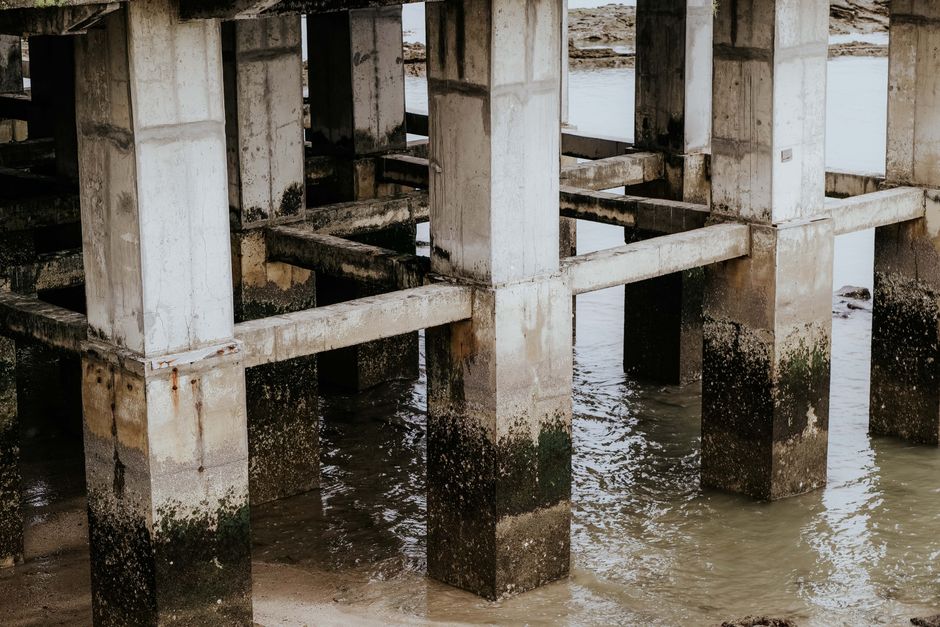
Pier and beam foundations elevate a home several feet off the ground using concrete piers or treated wood posts driven into stable soil. Horizontal wood beams span between these piers, and floor joists rest on top of the beam systems.
The space underneath becomes a crawl space, typically 18 to 36 inches tall, allowing access to plumbing and electrical lines.
By contrast, a concrete slab foundation pours a single monolithic layer of reinforced concrete directly onto prepared ground. Plumbing runs through the slab itself, and the home sits flush with the surrounding grade.
This system became the dominant foundation type for San Antonio tract homes built after the nineteen seventies because of lower material costs and faster construction.
Why Soil Behavior Matters in South-Central Texas
San Antonio sits at the geological boundary where the Edwards Plateau meets the Gulf Coastal Plain. Neighborhoods west and north of downtown often have shallow limestone bedrock, while areas east and south sit on deep expansive clay deposits.
These clay soils swell when saturated and shrink during drought cycles, generating vertical movement of two to four inches in some lots.
Slab foundations bear the full force of this soil movement directly. When clay heaves under one corner of a home, the rigid concrete must either flex, crack, or lift, which is why foundation cracks often appear within ten years on slabs built over untreated expansive soils.
Pier and beam systems handle the same conditions differently, since each pier can be re-shimmed or hydraulically lifted without disturbing the rest of the structure.
Local foundation contractors typically assess soil composition through a geotechnical report before recommending a system. Homeowners considering new construction or major renovations in clay-heavy zip codes should expect their chosen foundation type to dictate long-term maintenance costs more than almost any other building decision.
Step-by-Step: How to Choose Between Pier and Beam vs Slab for Your San Antonio Home
Choosing the right foundation starts with understanding the specific lot conditions before construction begins. Homeowners building or renovating in San Antonio should request a professional soil report from a geotechnical engineer, which identifies clay content, plasticity index, and seasonal moisture behavior at depth.
The 5-Step Decision Framework
- Order a soil report — A geotechnical analysis costs roughly $1,500 to $3,500 and reveals whether the lot has high-shrink clay, fill dirt, or stable substrate. This single document drives every decision that follows.
- Evaluate lot grading — Lots with slopes greater than 5 percent or poor drainage typically favor pier and beam systems, which tolerate uneven terrain. Flat, well-drained pads suit slab construction.
- Study the neighborhood age and pattern — Older historic districts like King William are dominated by pier and beam construction, both for architectural authenticity and because the original builders understood the local soil. Mid-century neighborhoods such as Alamo Heights show a mix of both types, while newer master-planned communities like Stone Oak almost exclusively use post-tension slabs engineered for the limestone-clay transition zones.
- Check drainage patterns — Walk the lot during or after a heavy rain. Standing water near the building envelope is a red flag for slab construction and may push the recommendation toward elevated pier and beam.
- Calculate the long-term budget — Initial construction cost is only one factor. Homeowners should weigh future repair likelihood, accessibility for plumbing or HVAC retrofits, and resale expectations within their target neighborhood.
Matching the foundation choice to neighborhood norms also matters for resale value. A modern slab home placed among 1920s pier and beam bungalows may appraise lower simply because it breaks the visual pattern buyers expect in that district.
Homeowners who feel uncertain about which system fits their lot can get matched with vetted contractors through this. Local foundation specialists review the soil report, walk the site, and provide written recommendations grounded in San Antonio building codes and decades of regional experience.
Cost, Lifespan, and Repair Comparison for San Antonio Foundations
Upfront pricing in the San Antonio market favors slab construction. New slab foundations typically run $4 to $7 per square foot, while pier and beam systems land closer to $8 to $12 per square foot due to extra framing, crawlspace ventilation, and skilled labor.
Bexar County permit fees add roughly $300 to $900 depending on square footage, and both types require the same engineered drawings before pour or set.
Lifespan tells a different story. A properly built pier and beam structure can last 75 to 100 years when crawlspace moisture is managed, because individual piers are accessible and replaceable.
Slabs are rated for 50 to 80 years, but a single major failure often forces full-system intervention rather than a localized fix.
30-Year Ownership Cost Snapshot
- Pier repair on a San Antonio home: replacing or shimming individual piers usually costs $1,000 to $3,000 per pier, with most homeowners touching three to six piers over three decades.
- Slab leveling using pressed pilings or polyurethane injection averages $5,000 to $15,000 per event, and many slabs in expansive clay zones require leveling two times across a 30-year window.
- Drought cycles in South Texas are the dominant cost driver — extended dry stretches followed by heavy rain trigger differential settlement that hits slabs harder than elevated systems.
- Ongoing maintenance for pier and beam (vapor barrier, pest control, ventilation) runs $200 to $600 annually, while slab homes carry minimal foundation upkeep until a problem appears.
Totaling these figures, professional companies in the area generally estimate a 30-year foundation cost of $18,000 to $35,000 for slab homes and $22,000 to $40,000 for pier and beam, once construction, repairs, and routine maintenance are combined.
Homeowners weighing resale value should also factor that buyers in flood-prone neighborhoods often pay a premium for elevated systems.

Common Mistake to Avoid
Many San Antonio homeowners make the mistake of choosing slab construction for a lot with known expansive clay soils simply because the upfront price looks attractive.
Skipping a geotechnical soil report before breaking ground often leads to differential settlement within 5 to 10 years, with repair bills that can exceed the original savings.
Professional foundation contractors in San Antonio typically recommend that buyers and builders evaluate soil swell potential, drainage patterns, and lot slope before locking in a foundation type rather than after problems appear.
Warning Signs Each Foundation Type Shows in San Antonio Homes
Distress symptoms read differently depending on whether a home sits on pier and beam or slab construction. Homeowners who learn to spot the right warning signs early can call a structural professional before minor movement turns into a five-figure repair.
Local foundation contractors in San Antonio generally agree that catching problems within the first season of symptoms reduces total repair costs by 30 to 50 percent.
Slab Foundation Red Flags
Slab homes telegraph trouble through the walls and floor coverings. The most common symptoms include stair-step cracks in exterior brick or stone veneer, drywall fractures running diagonally from window and door corners, and separation between baseboards and flooring.
Interior sticking doors that suddenly refuse to latch usually indicate the slab has shifted or heaved on one side.
Homeowners should also watch for hairline cracks in the slab itself where it meets the garage floor, and gaps appearing between countertops and backsplashes.
These patterns often follow seasonal clay movement and may seem to come and go, which is itself a warning that the slab is riding the soil rather than resisting it.
Pier and Beam Distress Patterns
Elevated systems show different symptoms because the structure can flex independently of the perimeter beams. Typical red flags include:
- Sloping floors detectable with a marble or level, often concentrated over a single failing pier
- Bouncy or springy floors that flex underfoot, signaling rotted joists or sagging girders
- Moisture intrusion in the crawlspace, including standing water, musty odors, or visible wood rot at pier tops
- Squeaking subfloors that worsen during humid months when wood members swell
- Visible gaps between piers and the beams they support, indicating the home needs pier shimming to restore level bearing
Any combination of these symptoms warrants a professional inspection rather than a DIY assessment, since hidden damage in crawlspaces and beneath slabs often exceeds what surface signs suggest.
Pier and Beam vs Slab Foundations: San Antonio Comparison
| Foundation Type | Pros in San Antonio | Cons in San Antonio | Best For |
|---|---|---|---|
| Pier and Beam | Elevated design handles expansive clay soil movement better; crawlspace allows easier access to plumbing and electrical; individual piers can be adjusted when settlement occurs; typically lower repair costs at $4,000 to $12,000 per event | Higher upfront construction cost; crawlspace requires moisture and pest monitoring; wood beams vulnerable to rot in poorly ventilated spaces; insulation upgrades often needed for energy efficiency | Older neighborhoods like Monte Vista and King William, lots with significant grade changes, properties on highly expansive clay, and homeowners prioritizing long-term repair flexibility |
| Slab on Grade | Lower initial construction cost; no crawlspace pest or moisture concerns; faster build timelines for production homes; modern post-tension cables resist San Antonio clay heave when properly engineered | Plumbing leaks require breaking through concrete; repair costs run $1,500 to $30,000+ for major lifts; cracks can spread across the entire pour; remediation is more invasive when soils shift | Newer subdivisions in Stone Oak, Alamo Ranch, and Cibolo Canyons, flat lots with stable soils, buyers seeking lower upfront pricing, and homes with engineered drainage already in place |
Frequently Asked Questions
Which foundation type holds up better in San Antonio's expansive clay soil?
Pier and beam systems generally tolerate clay soil movement better because individual piers can be shimmed or replaced as the ground shifts. Slab foundations sit directly on the soil and crack when the clay swells unevenly.
Local foundation contractors often recommend post-tension slabs or deep piers for new slab construction in active clay zones across Bexar County.
How much does it cost to convert a slab foundation to pier and beam?
Full conversion is rarely practical. The process requires lifting the entire structure, demolishing the slab, and installing a new beam system underneath. Homeowners researching this option should expect quotes between $60,000 and $120,000+ depending on home size.
Most professional companies recommend targeted slab repair or underpinning instead, which preserves the existing foundation at a fraction of the cost.
Do San Antonio building codes favor one foundation type over the other?
San Antonio building codes accept both foundation types, but require a geotechnical soil report for new construction in high-PI clay areas. Inspectors often scrutinize slab foundations more closely because of the region's documented soil movement issues.
Homeowners building in flood-prone zones near the San Antonio River may find elevated pier and beam designs are required by floodplain regulations.
How does foundation type affect home insurance premiums in Texas?
Foundation type itself rarely changes premiums directly. However, prior repair history and visible distress signs can flag underwriting concerns. Texas homeowners insurance typically excludes foundation movement caused by soil expansion, regardless of whether the home has pier and beam or slab construction.
Buyers should request a structural engineer report and review any past claims before closing on properties with documented foundation work.
Can I add a second story to a house with pier and beam foundation?
Adding a second story to pier and beam homes requires careful structural analysis. The existing beam systems and pier spacing may need reinforcement to carry the additional load. Professional companies typically recommend a licensed structural engineer evaluate the current foundation before permits are issued.
Reinforcement work often runs $15,000 to $40,000 on top of the addition cost itself.
Choosing between pier and beam vs slab foundations in San Antonio comes down to lot drainage, soil composition, and long-term repair budget. Both systems perform well when matched correctly to local expansive clay conditions and built by experienced foundation contractors who understand the regional soil reports.
Homeowners weighing a new build, a repair quote, or a second opinion benefit from independent evaluations before committing to any work. Get matched with vetted Foundation Repair in San Antonio, TX via our -matching form and compare options from licensed local professionals who specialize in both foundation types.