
San Antonio homeowners often discover gutter extensions foundation problems only after hairline cracks appear in drywall or doors stop closing properly. The expansive clay soils across Bexar County swell when saturated and shrink during drought, and runoff dumped directly beside the slab accelerates that cycle.
Standard gutters route water 6 to 12 inches from the wall, which is rarely enough on lots with poor grading or downhill slopes toward the home. Properly extended downspouts push that discharge 4 to 10 feet away from the perimeter, giving soils a chance to stabilize before moisture reaches footings.
Without that distance, repeated saturation can lead to differential settlement, pier movement, and repair bills running 8,000 dollars or more. Homeowners looking for protective drainage upgrades should expect a range of extension styles, materials, and grading considerations before getting matched with a vetted local contractor.
Why It Matters in San Antonio
San Antonio sits on expansive clay soils that swell when wet and shrink during drought, creating constant pressure on residential foundations. When roof runoff pools near the slab, this shrink-swell cycle accelerates, leading to cracks, sticking doors, and uneven floors.
Local rainfall patterns make this worse — the region averages 32 inches per year, often arriving in intense bursts that overwhelm short downspouts.
Properly extending gutters 5 to 10 feet from the foundation redirects thousands of gallons away from vulnerable soil each storm. For Bexar County homeowners, this low-cost preventive measure can defer five-figure foundation repairs and preserve resale value in a competitive Texas housing market.
Why San Antonio Soil Makes Downspout Extensions Non-Negotiable
San Antonio sits on a geological layer cake that punishes any home with poorly managed roof runoff. The dominant surface material across Bexar County is expansive clay soil, a montmorillonite-rich substrate that swells when saturated and contracts violently when it dries.
Foundation engineers in the region routinely measure soil-volume changes of 6 to 9 percent between seasons.
The Edwards Plateau drainage pattern compounds the problem. Runoff that sheets off the plateau funnels through caliche and clay layers, leaving residential lots with shallow infiltration capacity and aggressive lateral water movement.
When a 2,000-square-foot roof dumps unextended water within three feet of a slab, that moisture concentrates exactly where the soil is most reactive.
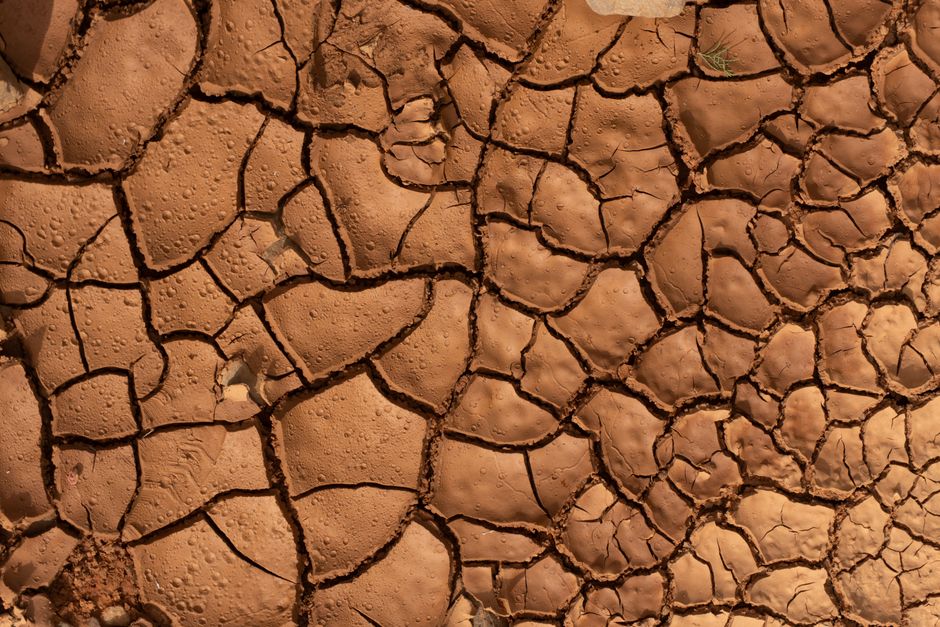
Then comes the Texas drought-flood cycle. Local clays shrink during prolonged dry stretches, then absorb several inches of rain in a single storm event. This rapid wet-dry oscillation is the primary driver of foundation heave, differential settlement, and the hairline cracks that homeowners often discover only after damage is widespread.
What Unmanaged Runoff Does to a San Antonio Slab
- Edge heave — perimeter soil swells faster than interior soil, lifting exterior walls
- Center settlement — interior clay dries and shrinks while perimeter stays wet, causing the slab to dish
- Pier movement — concentrated runoff erodes bedding around drilled piers and bell-bottom footings
- Plumbing leaks — repeated soil movement fractures supply lines and sewer laterals beneath the slab
Local foundation contractors typically advise that downspout extensions are the single cheapest insurance against these failure modes. Homeowners researching options can use a to connect with vetted professionals who understand Bexar County soil behavior.
How to Measure Roof Runoff and Plan Extension Length for Your Lot
Planning extension length starts with a simple calculation. Homeowners should measure the roof square footage draining to each downspout, not the entire roof. A typical hip roof with four downspouts splits the load roughly in quarters, while a gable roof often concentrates 60 percent of runoff into 2 corner downspouts.
For every 1,000 square feet of roof area, a one-inch rainfall produces about 623 gallons of water that has to go somewhere.
Industry guidance from foundation engineers establishes a 6-foot minimum discharge distance from any exterior wall, with 10 feet preferred on lots with expansive clay.
Local contractors working across Bexar County frequently recommend extending to the property line when San Antonio lot sizes allow, particularly on the smaller 6,000 to 8,500 square foot parcels common in older neighborhoods like Alamo Heights and Monte Vista.
Slope and Discharge Zone Adjustments
The required extension length grows when the yard slopes toward the house. Professional installers typically use this rule of thumb when adjusting for slope grade:
- Positive slope away from foundation (2% or greater): 6-foot extension is usually sufficient
- Flat lot (less than 1% grade): Extend to 8 to 10 feet and consider a splash dispersal pad
- Negative slope toward foundation: Buried drain line to a daylight outlet 15 to 20 feet away
- Lots backing to a swale or easement: Discharge directly into the drainage path
The final discharge zone should never empty onto a neighbor's property, into a city sidewalk, or within 10 feet of a septic field. Homeowners on hillside lots in stone oak or the dominion often need engineered solutions because gravity discharge would erode landscaping or violate HOA grading covenants.
Step-by-Step Installation of Gutter and Downspout Extensions
A standard rectangular downspout extension install runs roughly two to three hours per drop for a competent DIYer. Before starting, homeowners should gather tin snips, a cordless drill, a 1/4-inch hex driver, a 4-foot level, and exterior-grade silicone.
Materials needed include a downspout adapter sized to the existing 2x3 or 3x4 outlet, two aluminum elbow sections, a length of solid extension pipe, and either a splash block or a buried tie-in kit.
Sequenced Install Walkthrough
- Cut the existing downspout roughly 6 inches above grade using tin snips. The cut should be square and deburred so the adapter seats flush.
- Slip the downspout adapter over the cut end. Most adapters are sized to friction-fit, but professional installers in San Antonio typically secure the joint with three screws and sealant — one on each visible face, driven through pre-drilled pilot holes.
- Attach the first aluminum elbow at a 75-degree angle pointing away from the wall. A full 90-degree turn restricts flow and encourages backups during heavy storms.
- Run the horizontal extension pipe with a minimum 1/4-inch-per-foot pitch. A 4-foot level laid on top of the pipe should show the bubble offset by roughly one mark.
- Terminate the run over a splash block bedded in compacted gravel, OR connect to a 4-inch underground drain pipe using a rubber Fernco coupling.
For buried tie-ins, the trench should slope continuously toward daylight or a dry well, with no sags that could pond water and freeze during the rare San Antonio cold snap.
Every mechanical joint above ground gets two beads of silicone — one inside the female fitting before assembly, one wiped along the outside seam after seating.
Homeowners who reach the underground tie-in step and feel uncertain about trench depth, daylight grading, or municipal stormwater rules should consider getting matched with a vetted local contractor through this rather than guessing.
Common Mistake to Avoid
The most frequent error is terminating extensions just 2 to 3 feet from the wall and assuming that distance is enough. On Bexar County lots with expansive clay, water released that close still saturates the active soil zone beneath the slab perimeter.
Another common misstep is using flexible accordion-style extensions that crush under foot traffic or mower wheels, restricting flow and back-pooling runoff against the foundation. Professional drainage contractors typically specify rigid PVC or solid aluminum extensions discharging well past the structural footprint to avoid these failure modes.
Choosing Between Flexible, Rigid, and Buried Extension Systems
San Antonio homeowners weighing extension options will encounter four mainstream categories, each with distinct tradeoffs in installed cost, lifespan, and HOA appearance rules. The cheapest tier is the flexible accordion sleeve — corrugated polyethylene that stretches from 2 to 6 feet and slips over an existing downspout.
Material runs $8 to $15 per unit, but UV exposure on south-facing Bexar County elevations typically cracks the ribs within 3 to 5 years.
Rigid PVC roll-out systems use 4-inch schedule 40 pipe glued into elbows and routed underground or along the grade. Material plus fittings land between $40 and $90 per drop, and properly cemented joints last 20 years or more.
Rigid PVC handles the punishing thermal swings between 105°F summers and occasional freezes far better than thin-wall flex tubing.
The hinged flip-up extension solves a specific problem: lawn mowing. A spring-loaded hinge at the downspout elbow lets the extension fold flat when the crew passes, then snaps back into drainage position.
Cost sits around $25 to $45 per drop, and the mechanism typically tolerates 10 years of repeated use before the spring fatigues.
Buried Drain Systems for HOA-Sensitive Neighborhoods
Buried drain installations — sometimes called pop-up emitters fed by a French-drain-style trench — are the premium choice for master-planned communities like Stone Oak or Alamo Ranch where HOA appearance rules forbid visible black tubing on the grass.
Installed cost ranges from $400 to $900 per drop because the work involves trenching 8 to 12 inches deep, bedding solid PVC, and terminating at a pop-up emitter. Curb appeal stays pristine, and the discharge point can be relocated 15 to 25 feet from the foundation.
Maintenance Schedule and Warning Signs of Extension Failure
Extension systems require seasonal inspection tied to San Antonio rainfall patterns. Local contractors generally recommend two scheduled checks per year, plus a quick walkthrough after any storm dropping more than an inch of rain.
The two anchor checks fall before spring storm season in late February and after the fall leaf clog risk peaks in mid-November.
Quarterly Checklist Homeowners Can Run Themselves
- Pre-spring (February): Flush each downspout with a garden hose at full pressure. Watch for backflow at the gutter — a sign of internal blockage upstream of the extension.
- Post-storm: Walk the discharge zone within and look for pooling water sitting longer than 48 hours, which indicates poor grading or an undersized extension.
- Late fall (November): Clear oak catkins, pecan leaves, and live oak debris from gutter strainers and any buried drain pop-up emitters.
Several visible cues signal that extensions have failed or are routing water incorrectly. Hairline foundation cracks appearing along the slab edge nearest a downspout are an early warning, especially when paired with sticky doors on that elevation.
Soil erosion ruts fanning out from the discharge point mean water velocity is too high, requiring a splash block or rock dispersion pad.
Mulch washing into beds, mildew streaks on siding within three feet of grade, and exposed weep holes on brick veneer all suggest extensions have shifted, separated, or simply run too short for the runoff volume they receive.
Downspout Extension System Comparison for San Antonio Homes
| Extension Type | Pros | Cons | Best For |
|---|---|---|---|
| Flexible Accordion | Lowest upfront cost ($8 to $15 per drop), tool-free installation, easy to retract for mowing, widely stocked at local hardware retailers | Short two to three year service life, kinks under foot traffic, UV degradation common in Texas sun, frequent replacement needed | Renters, short-term homeowners, or properties awaiting larger drainage upgrades within 24 months |
| Rigid PVC Above-Ground | Durable for 10 years or more, handles heavy roof runoff, paintable to match siding, resists rodent damage | Requires removal before mowing, $25 to $45 per drop in materials, visible across the yard, fittings can separate without strapping | Properties with planting beds, side yards out of mower paths, homeowners wanting a 10 year solution |
| Buried Drain with Pop-Up Emitter | Invisible from the surface, discharges 10 to 20 feet from foundation, lawn-friendly, increases curb appeal | Highest installation cost ($400 to $900 per drop), trenching disrupts landscaping, emitter requires annual flushing, shrink-swell can stress joints | Established yards on expansive clay, homeowners staying long-term, lots with sufficient slope away from the slab |
| Splash Block with Diverter | Cheapest option (under $20), no tools required, works with existing downspouts, easy to reposition seasonally | Discharges water only 2 to 3 feet from wall, inadequate for Bexar County clay soils, prone to displacement during heavy rain | Supplementary use only, properties already routed to a buried drain, low-runoff secondary downspouts |
Frequently Asked Questions
How much do gutter and downspout extensions typically cost in San Antonio?
Pricing varies by material and discharge distance. Local contractors typically quote $25 to $90 per drop for surface extensions, while buried drain systems run $400 to $900 per downspout depending on trench length. Homeowners should expect higher quotes on lots with mature live oaks, caliche layers, or steep grading.
Multiple-bid comparisons help establish fair pricing across Bexar County neighborhoods.
Will extensions actually prevent foundation movement on expansive clay?
Properly sized extensions significantly reduce moisture cycling at the foundation perimeter, which is the primary driver of slab movement on Texas blackland and Houston-clay soils. They cannot eliminate seasonal soil shrinkage entirely. Homeowners pairing extensions with consistent perimeter watering during droughts see the strongest results.
Extensions are preventive infrastructure, not a cure for existing structural damage.
Can homeowners install downspout extensions themselves?
Surface-mounted flexible and rigid extensions are within reach for handy homeowners. Required tools include a cordless drill, hacksaw, level, and stainless screws. Buried drain systems are different. Trenching through caliche, maintaining proper slope, and tying into pop-up emitters or daylight discharge zones generally warrants professional installation.
DIY attempts on buried systems frequently result in clogs and standing water within 2 years.
Are there permits or HOA restrictions to consider?
Bexar County does not require permits for residential gutter extensions on private property. However, many San Antonio HOAs regulate visible above-grade extensions, paint colors, and discharge points crossing property lines. Homeowners should review their CC&Rs before installing buried systems near easements.
Discharging runoff onto a neighbor's lot or city sidewalk can trigger nuisance complaints under municipal drainage ordinances.
How do extensions perform during heavy Texas thunderstorms?
Quality extensions handle typical 2 to 4 inch rainfall events without backflow when sized correctly. During extreme downpours exceeding 6 inches per hour, even properly installed systems may overflow at the gutter line. Adequate downspout count, debris-free strainers, and 10-foot minimum discharge length reduce overflow risk.
Homeowners in flood-prone neighborhoods should pair extensions with regraded swales for redundancy.
Gutter and downspout extensions are the cheapest foundation insurance any homeowner across Bexar County can install. Moving roof runoff six to ten feet from the slab prevents the shrink-swell cycles that crack piers, separate brick veneer, and trigger $8,000 to $25,000 in foundation repair bills down the line.
Sizing, slope, and discharge points should be matched to each lot's grade and soil profile. Get matched with vetted Foundation Repair in San Antonio, TX via our -matching form for an on-site assessment from local drainage specialists.